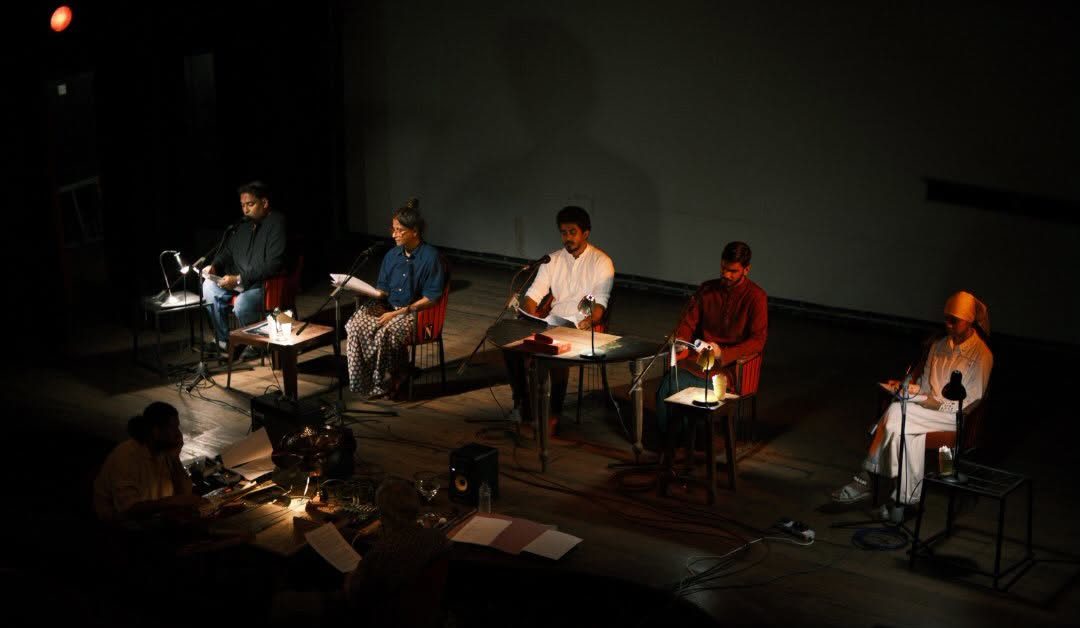
Mind Adventures’ De Profundis 2.0 paired readings on Gaza and Sri Lanka with live, improvised sound. The voices carried the evening; the sound too often stood in their way.
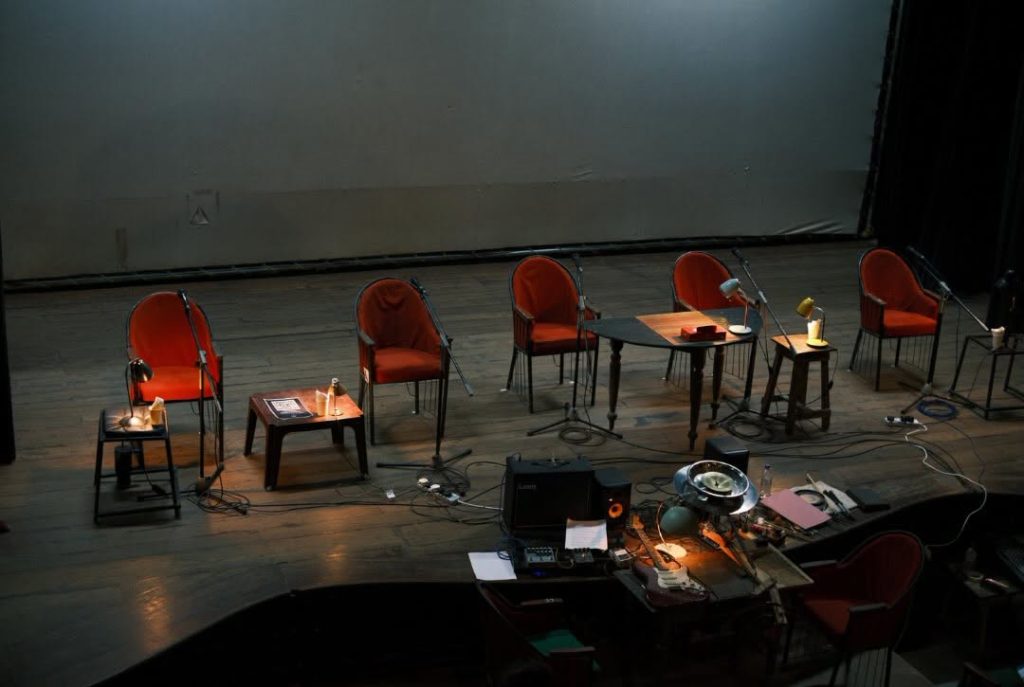
Five chairs stood in a row at the back of the stage, each with its own microphone, set against a plain white screen. In front of them, at a table lit by desk lamps and crowded with equipment, sat the evening’s two sound artists, Simon Allen and Sarani Perera. The readers behind, the sound up front: in hindsight, it was a telling arrangement for Mind Adventures’ ‘De Profundis 2.0 (Out of the Depths)’, staged at the Punchi Theatre on Wednesday, 21 October. On the night, the voices carried the evening, and the sound too often stood in their way.
The production borrows its title and spirit from Oscar Wilde’s prison letter, written “from the depths”. It was first performed in November 2024 and again at the inaugural Kolamba Kamatha festival in 2025. This second iteration pairs readings in English and Sinhala with live, improvised sound, is curated more tightly around Gaza and Sri Lanka, and opens Thusitha Jayasundera’s artistic residency with the company. All profits were pledged to United for Gaza and Hope Nest, which support children in Palestine. The house was around 80 percent full, a healthy turnout for a midweek night and a cause that deserved one.
It was not all Gaza. Sri Lankan stories were woven between the Palestinian ones, and the pairing asks the audience to hold both histories in mind at once. Not every local piece was spectacular, but where they worked, they hit home. The finest was Hajarah Faleel’s solo tongue twister, which tumbled ‘terrorism’ and ‘tourism’ together until the two words began to blur. Her repetitive, rhythmic delivery fitted the words exactly, and for a country that has lived through both, the joke grew more uncomfortable the longer it ran.
The evening rose highest when the readers shared a single text. Sean Amarasekera and Dhanushka Dias performed a piece built around a school report card, with Amarasekera voicing the report card itself. Their two distinct voices interlocked in perfect synchronisation, the script was cleanly cut, and together they gave the story real life. Thusitha Jayasundera’s account of refugees offering food as a gift was quietly moving: in her telling, the gesture insisted that these were still people who wanted to give, not merely receive aid. Murthaaz Abdul Barry, too, gave a good performance.
The best piece by far belonged to Amarasekera. He read the account of a dying infant, carried in by her brother, bleeding in the brain. He was, quite literally, brought to tears, and so was the audience.
The sound
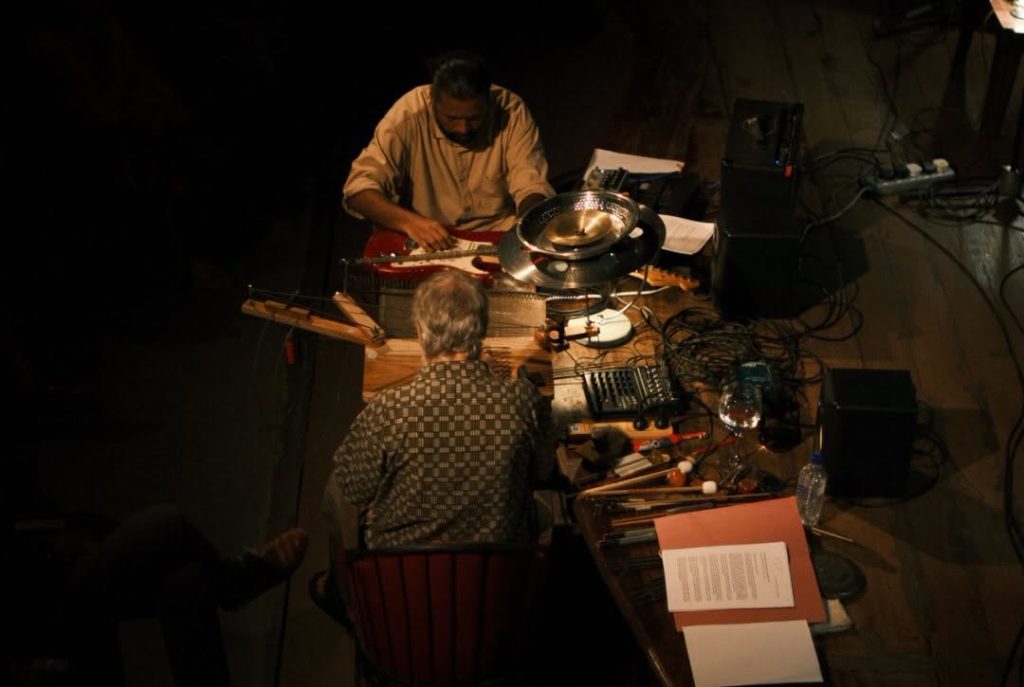
Which brings us to the sound. Simon Allen is an accomplished composer and percussionist, with theatre credits at the National Theatre, the Royal Shakespeare Company and the Young Vic, and recordings that explore metal, glass and invented instruments. Sarani Perera is a guitarist and sound artist at the heart of Colombo’s experimental music scene. These are serious artists, capable of conjuring anything from a ringtone to a film sound effect, and their work has its place. That place may not be in front of a conventional theatre audience.
What we heard was not music as most of that audience would know it. There was no beat or rhythm to follow, only sounds loosely building on one another, and at one point a single sound repeated over and over. Allen, who took centre stage for much of it, bore the brunt of my unease. There is something innately comic about watching a sound effect being made, the Monty Python coconut shells problem, and beside stories of such gravity it felt too experimental. Material this heavy asks its accompaniment to take the back seat. Had the sounds grown out of the text before or after them, they would have made sense. Too often, they seemed to be holding a separate conversation. A series of audio failures during the evening did not help.
The frustration is that when the accompaniment did sit beneath the voices, it was exceptional. There was simply too little of it. I should confess that my understanding of music is limited, and I apologise to performers and audience alike if I missed what others heard.
But who am I to argue? Experimenting is their right, and a company that fails gloriously and keeps trying is worth more than one that plays it safe. A second attempt at this material is well warranted, and if Mind Adventures wants to lean even harder into experimental music, so be it. The voices on that stage, and the stories they carried, deserve to be heard again. Whatever form it takes, Sri Lanka needs more theatre, not less.
Mind Adventures ආයතනයේ De Profundis 2.0, ගාසා තීරය සහ ශ්රී ලංකාව පිළිබඳ කියවීම් සජීවී, ක්ෂණිකව නිර්මාණය වූ ශබ්ද සමඟ එක් කළේ ය. සන්ධ්යාව රැගෙන ගියේ කටහඬවල් ය; ශබ්දය බොහෝ විට ඒවාට බාධාවක් විය.
වේදිකාවේ පසුපස පේළියකට පුටු පහක් තබා තිබුණි. සෑම පුටුවකටම තමන්ගේම මයික්රෆෝනයක් වූ අතර, ඒ සියල්ල සරල සුදු තිරයක් ඉදිරියේ විය. ඒවා ඉදිරියේ, මේස ලාම්පුවලින් ආලෝකමත් වූ, උපකරණවලින් පිරුණු මේසයක, එදින සවස ශබ්ද කලාකරුවන් දෙදෙනා වන සයිමන් ඇලන් සහ සරනි පෙරේරා අසුන් ගෙන සිටියහ. කියවන්නන් පිටුපසින්, ශබ්දය ඉදිරියෙන්: ආපසු හැරී බලන විට, ඔක්තෝබර් 21 වන බදාදා පුංචි රඟහලේ වේදිකාගත වූ Mind Adventures හි ‘De Profundis 2.0 (Out of the Depths)’ සඳහා එය බොහෝ දේ කියාපාන සැකැස්මක් විය. එදින රාත්රියේ සන්ධ්යාව රැගෙන ගියේ කටහඬවල් ය; ශබ්දය බොහෝ විට ඒවාට බාධාවක් විය.
මෙම නිෂ්පාදනය සිය නාමය සහ ආත්මය ණයට ගන්නේ ඔස්කාර් වයිල්ඩ් සිරගෙදර සිට, “ගැඹුරේ සිට” ලියූ ලිපියෙනි. එය මුලින්ම 2024 නොවැම්බරයේ රඟ දැක්වූ අතර, 2025 දී පැවති පළමු Kolamba Kamatha උළෙලේ දී නැවත වේදිකාගත විය. මෙම දෙවන අනුවාදය ඉංග්රීසි සහ සිංහල කියවීම් සජීවී, ක්ෂණිකව නිර්මාණය වන ශබ්ද සමඟ එක් කරයි; ගාසා තීරය සහ ශ්රී ලංකාව වටා වඩාත් තදින් සංවිධානය කර ඇත; එමෙන්ම තුසිතා ජයසුන්දරගේ කලා නේවාසික වැඩසටහන ආයතනය සමඟ ආරම්භ කරයි. සියලු ලාභ පලස්තීනයේ දරුවන්ට සහාය වන United for Gaza සහ Hope Nest වෙත පරිත්යාග කිරීමට පොරොන්දු විය. රඟහල සියයට 80ක් පමණ පිරී තිබුණි. සතියේ මැද රාත්රියකට එය හොඳ සහභාගිත්වයක් වූ අතර, එම අරමුණ එයට සුදුසු ද විය.
එය සියල්ල ගාසා කතා නොවී ය. පලස්තීන කතා අතරට ශ්රී ලාංකේය කතා ද ගොතා තිබූ අතර, එම සංයෝජනය ඉතිහාස දෙකම එකවර සිතේ තබා ගන්නා ලෙස ප්රේක්ෂකයාගෙන් ඉල්ලා සිටී. සෑම දේශීය කොටසක්ම විශිෂ්ට නොවූ නමුත්, සාර්ථක වූ තැන්වල ඒවා හදවතටම වැදුණි. හොඳම එක වූයේ හජාරා ෆලීල්ගේ තනි වචන හරඹයයි (tongue twister). එය ‘terrorism’ (ත්රස්තවාදය) සහ ‘tourism’ (සංචාරක ව්යාපාරය) යන වචන දෙක, ඒවා බොඳ වී යන තුරු එකිනෙක පටලවා පෙරළුවේ ය. ඇයගේ පුනරාවර්තන, රිද්මයානුකූල ඉදිරිපත් කිරීම වචනවලට හරියටම ගැළපුණු අතර, ඒ දෙකම අත්විඳි රටකට එම විහිළුව දිගු වන්නට වන්නට වඩාත් අපහසු විය.
කියවන්නන් එකම පාඨයක් බෙදා ගත් විට සන්ධ්යාව සිය උච්චතම අවස්ථාවට පත් විය. ෂෝන් අමරසේකර සහ ධනුෂ්ක ඩයස් පාසල් වාර්තා පොතක් වටා ගොඩනැගූ කොටසක් රඟ දැක්වූ අතර, අමරසේකර වාර්තා පොතටම හඬ දුන්නේ ය. ඔවුන්ගේ එකිනෙකට වෙනස් කටහඬවල් දෙක පරිපූර්ණ සමගාමීව එකිනෙක බැඳුණි; පිටපත පිරිසිදුව කපා තිබුණි; දෙදෙනා එක්ව කතාවට සැබෑ ජීවයක් ලබා දුන්හ. සරණාගතයින් තෑග්ගක් ලෙස ආහාර පිරිනැමීම පිළිබඳ තුසිතා ජයසුන්දරගේ විස්තරය නිහඬව හදවත සසල කළේ ය: ඇයගේ ඉදිරිපත් කිරීමේ දී, එම ක්රියාව අවධාරණය කළේ මොවුන් හුදෙක් ආධාර ලබන්නන් නොව, තවමත් දීමට කැමති මිනිසුන් බවයි. මුර්තාස් අබ්දුල් බාරි ද හොඳ රංගනයක් ඉදිරිපත් කළේ ය.
කෙසේ වෙතත් හොඳම කොටස අමරසේකරට අයත් විය. මොළයේ ලේ ගලමින් සිටි, සිය සොහොයුරා විසින් රැගෙන එනු ලැබූ, මිය යමින් සිටි ළදරුවියක පිළිබඳ විස්තරය ඔහු කියවී ය. ඔහු වචනාර්ථයෙන්ම කඳුළු සැලුවේ ය; ප්රේක්ෂකයෝ ද එසේ ම ය.
ශබ්දය
මෙයින් අප ශබ්දය වෙත පැමිණෙමු. සයිමන් ඇලන්, ලන්ඩනයේ National Theatre, Royal Shakespeare Company සහ Young Vic යන රඟහල්වල රංග ගෞරව ද, ලෝහ, වීදුරු සහ නව නිපැයුම් සංගීත භාණ්ඩ ගවේෂණය කරන පටිගත කිරීම් ද ඇති, දක්ෂ සංගීත නිර්මාපකයෙකු සහ බෙර වාදකයෙකි. සරනි පෙරේරා කොළඹ පර්යේෂණාත්මක සංගීත ක්ෂේත්රයේ හදවතේ සිටින ගිටාර් වාදකයෙකු සහ ශබ්ද කලාකරුවෙකි. මොවුන් බැරෑරුම් කලාකරුවන් වන අතර, ජංගම දුරකථන නාදයක සිට චිත්රපට ශබ්ද ප්රයෝගයක් දක්වා ඕනෑම දෙයක් මවා පෑමට හැකියාව ඇත. ඔවුන්ගේ කාර්යයට එයටම ආවේණික ස්ථානයක් ඇත. එම ස්ථානය සාම්ප්රදායික රංග ප්රේක්ෂකයින් ඉදිරිපිට නොවිය හැකි ය.
අප ඇසුවේ එම ප්රේක්ෂකයින්ගෙන් බොහෝ දෙනා දන්නා ආකාරයේ සංගීතයක් නොවේ. අනුගමනය කිරීමට තාලයක් හෝ රිද්මයක් නොතිබුණි; තිබුණේ එකිනෙක මත ලිහිල්ව ගොඩනැගෙන ශබ්ද පමණි. එක් අවස්ථාවක එකම ශබ්දය නැවත නැවතත් පුනරාවර්තනය විය. බොහෝ වේලාවක් වේදිකාවේ කේන්ද්රය වූ ඇලන්, මගේ අපහසුතාවයේ වැඩි බර දරා ගත්තේ ය. ශබ්ද ප්රයෝගයක් සාදන අයුරු නැරඹීමේ ස්වභාවයෙන්ම හාස්යජනක යමක් ඇත — Monty Python පොල් කටු ගැටලුව — එතරම් බැරෑරුම් කතා අසල එය අධික ලෙස පර්යේෂණාත්මක බවක් දැනුණි. මෙතරම් බර කරුණු, සහායට එන ශබ්දයෙන් පසුපස අසුන ගන්නා ලෙස ඉල්ලා සිටී. ශබ්ද ඊට පෙර හෝ පසු පාඨයෙන් පැන නැගුණා නම්, ඒවා අර්ථවත් වනු ඇත. බොහෝ විට ඒවා වෙනම සංවාදයක යෙදී සිටින්නාක් මෙන් පෙනුණි. සන්ධ්යාව අතරතුර ඇති වූ ශ්රව්ය දෝෂ මාලාවක් ද උදව්වක් නොවී ය.
කලකිරීම නම්, සහායක ශබ්දය කටහඬවලට යටින් රැඳුණු විට එය විශිෂ්ට වීමයි. එහෙත් එය ඉතා අල්ප විය. සංගීතය පිළිබඳ මගේ අවබෝධය සීමිත බව මා පිළිගත යුතු අතර, අන් අය ඇසූ යමක් මට මඟ හැරුණා නම්, රංගන ශිල්පීන්ගෙන් සහ ප්රේක්ෂකයින්ගෙන් එක සේ සමාව අයදිමි.
නමුත් තර්ක කිරීමට මා කවුද? අත්හදා බැලීම ඔවුන්ගේ අයිතියයි. තේජාන්විතව අසාර්ථක වී දිගටම උත්සාහ කරන ආයතනයක්, අවදානම් නොගන්නා ආයතනයකට වඩා වටී. මෙම කරුණු සඳහා දෙවන උත්සාහයක් සැබවින්ම සාධාරණ වන අතර, Mind Adventures පර්යේෂණාත්මක සංගීතය දෙසට තව තවත් නැඹුරු වීමට කැමති නම්, එසේ වේවා. එම වේදිකාවේ කටහඬවල් සහ ඒවා රැගෙන ගිය කතා නැවත ඇසීමට සුදුසු ය. එය කුමන ස්වරූපයක් ගත්ත ද, ශ්රී ලංකාවට අවශ්ය වන්නේ අඩු නොව, වැඩි රංග කලාවකි.